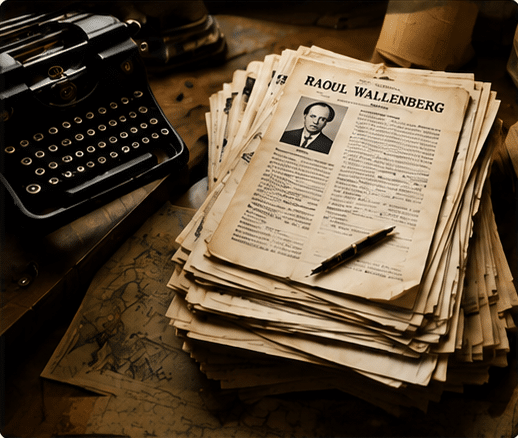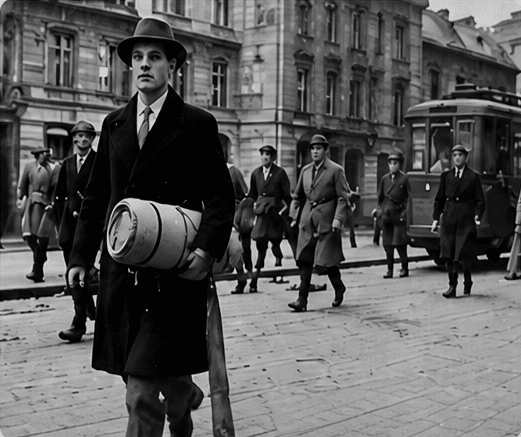
Explore how Raoul Wallenberg’s courage, strategy, and network of allies saved thousands in 1944 Budapest, showing the power of resistance and humanity.
Courage in Crisis: Wallenberg and the Power of Resistance in Budapest
Budapest, 1944. The city was a shadow of its former self. Fear hung in the streets. Families were torn apart. Jewish residents faced starvation, deportation, and death marches. In the middle of this nightmare, one man chose not to retreat. Raoul Wallenberg stepped into the chaos and turned courage into action.
Wallenberg’s strength wasn’t born from training or rank. It came from observation and thought. He didn’t simply respond to events. He studied them. He mapped them. Every street, every building, every official he met became part of a plan to save lives.
He created a network few could imagine. Journalists, diplomats, resistance fighters, and even members of the Hungarian authorities who secretly opposed the Nazis all became allies in a mission that seemed impossible. Each person had a role, and each connection counted. Wallenberg understood that survival was not a solo effort. It was collective, carefully coordinated, and relentless.
He issued Schutz-Passes — protection documents that looked official but had no real legal weight. And yet, they worked. Thousands of Jewish men, women, and children were shielded from deportation because Wallenberg combined strategy with humanity. Shelter, food, and medical care were not afterthoughts. They were part of the blueprint he built from day one.
Resistance, in his view, took many forms. Negotiating with officials. Bluffing when necessary. Showing up at internment sites. Even appearing calm in front of armed soldiers was a kind of defiance. Wallenberg’s courage was not flashy. It was precise, measured, and deeply personal. He didn’t seek recognition. He sought results.
Wallenberg also knew the power of information. He tracked the movement of the Red Army, the timing of deportations, and the shifting loyalties of Hungarian authorities. By acting on accurate intelligence, he could plan rescues that minimized risk and maximized lives saved. But behind the strategy was a man who felt. He mourned the losses. He celebrated small victories. He could be gentle and warm one moment, and firm the next. That balance made him effective. It made him human.
His work in Budapest shows that resistance is not always about armed struggle or public protest. Sometimes, it’s about quietly challenging injustice, building alliances, and daring to act when everyone else is paralyzed by fear. Wallenberg demonstrated that even in the darkest moments, one individual’s courage can ripple outward, inspiring others and creating a network of hope.
The story of Raoul Wallenberg is a testament to the idea that heroism is a choice. It’s about deciding, again and again, to act with integrity, even when the cost is unknown. The streets of Budapest were filled with danger, yet Wallenberg and those who supported him proved that organized resistance, guided by courage and foresight, can save thousands.
Wallenberg’s legacy reminds us that a crisis does not excuse inaction. It demands deliberate, thoughtful bravery. And it proves that even in extreme danger, human courage and strategic resistance can bend history toward life.