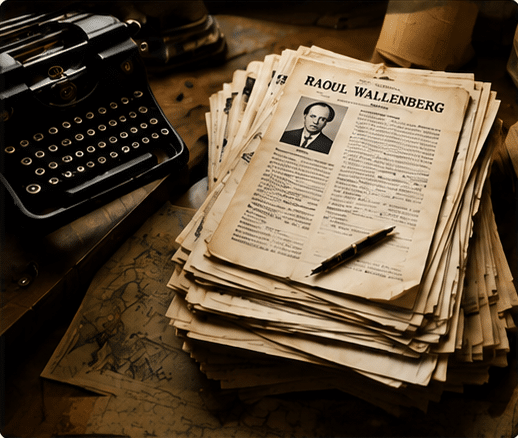
Discover how Raoul Wallenberg built a secret network of allies, shelters, and strategies that saved thousands during Budapest’s darkest months.
Budapest Under Siege: How Wallenberg Built a Network of Courage
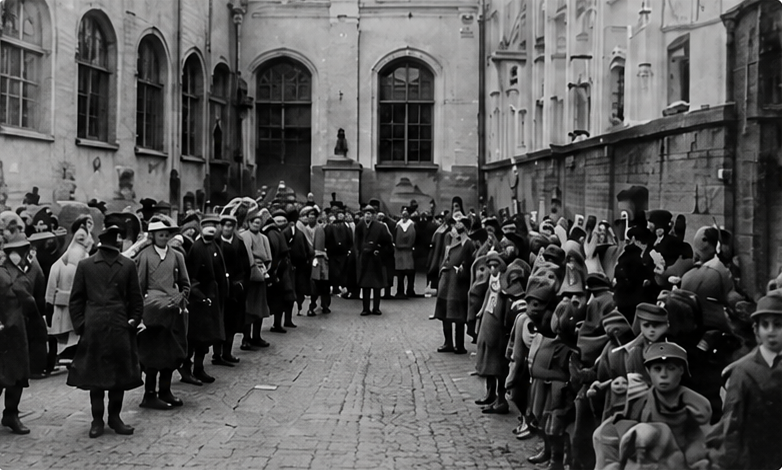
In the summer of 1944, Budapest was a city shrinking under fear. Streets were quiet. Families hid behind doors marked with yellow stars. Rumors moved faster than the trams. Every day brought a new order, a new threat, a new reason to worry. In the middle of that tension, Raoul Wallenberg arrived with a suitcase, a notebook, and a mission that sounded almost impossible.
What he saw was not just suffering. He saw a city being pulled apart by panic, hunger, and the brutality of a collapsing system. But he also saw something else. Openings. Small ones, at first. People who were willing to help. Rooms that could become shelters. Papers that could be redesigned. A single promise that, if spoken with enough confidence, could change a soldier’s mind.
Wallenberg understood one thing very clearly: he couldn’t save lives alone. He needed people. And he needed them fast.
So he started building.
He knocked on doors, introduced himself, and listened. He met community leaders who still held influence, even in the shadows. He spoke with diplomats who had the authority he needed. He reached out to journalists who knew what was happening behind closed doors. He found officers—some inside the same forces that terrorized Budapest—who were willing to bend a rule if it meant stopping a tragedy.
His network didn’t form overnight. It grew one conversation at a time. One handshake. One risky meeting in a crowded café. He never assumed he had control. He simply created options. And as the pressure on the Jewish population increased, those options became lifelines.
Wallenberg also had a rare talent for reading people. He could sense fear. He could sense hesitation. He could sense when someone needed help deciding to do the right thing. That sensitivity helped him turn unlikely allies into trusted partners. Some provided information. Some provided transportation. Others hid people when the city’s streets became too dangerous.
His famous Schutz-Passes were effective not only because of the design. They worked because his network gave them authority. A signature meant nothing unless the right people agreed to honor it. Wallenberg made sure they did. He spoke with ministers, police officers, and military staff until the passes carried weight.
As Budapest tightened under siege, his network worked like a living system. When one part collapsed, another stepped in. If a safe house was exposed, the residents were moved within hours. If food supplies were cut off, someone in his circle found a new source. If the authorities changed the rules as they often did, Wallenberg adapted faster than they expected.
Even as danger grew, he stayed in constant motion. He walked into buildings controlled by armed men. He argued at train stations packed with deportees. He pushed his way into offices where most people never dared to knock. But he didn’t do these things because he was fearless. He did them because his network depended on his presence. People were braver when he was near. That was his real power.
Budapest was a city under siege. Yet in the middle of its darkest months, a web of courage stretched quietly through its streets—one that Wallenberg built with persistence, trust, and the unshakable belief that every life mattered.