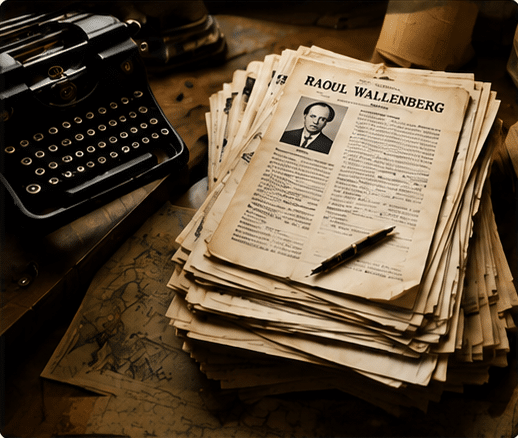
Raoul Wallenberg didn’t enter World War II as a soldier. He entered it as a man with a sharp mind, a notebook, and a sense of responsibility that refused to sit still. When he stepped into Budapest in 1944, he walked straight into one of the darkest chapters of the war. The city was filled with fear, hunger, and uncertainty. Yet Wallenberg didn’t flinch. He began building a rescue operation that would challenge the most dangerous forces in Europe.
Wallenberg’s war wasn’t fought with weapons. It was fought with strategy. He understood one simple truth: information and relationships could save lives faster than bullets ever could.
His allies came from all corners. Some were diplomats. Some were ordinary citizens. Some were people he barely knew but trusted enough to take risks with. Carl Lutz of the Swiss legation. Leaders from the Jewish community. Members of the Hungarian resistance. Even a few police officers quietly pushed back against orders. Each relationship added a new layer of protection for the people he was trying to save.
Wallenberg used his allies the way a chess player uses the board. Every piece mattered. Every move had to count. He met them in crowded apartments, safe houses, and offices buzzing with tension. They shared news, warnings, and small windows of opportunity. Those moments helped him stay one step ahead of the authorities who wanted to shut him down.
But allies were only part of the story. Wallenberg also had enemies—powerful ones.
German SS officers. Arrow Cross militants. Corrupt officials who treated human lives like currency. They controlled the streets, the checkpoints, and the trains that carried people to their deaths. Every day, Wallenberg had to walk through their world. Sometimes he had to bluff his way past them. Sometimes he had to confront them directly. He did both with a calm confidence that often surprised the people around him.
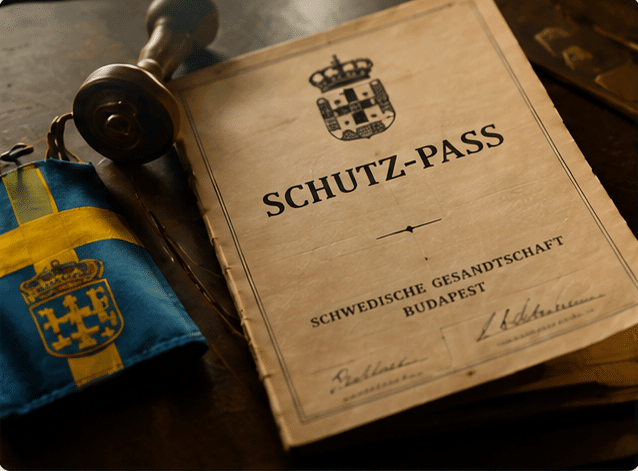
There were days when he arrived at train stations moments before deportations began. He pushed through armed guards, waving his protection papers, demanding the release of anyone listed under Swedish protection. Some soldiers backed down. Others argued. A few threatened him. But he kept going, repeating the same message over and over: these people are under my authority.
He fought fear with certainty. He fought violence with presence. And he fought cruelty with a plan that grew stronger each day.
What made Wallenberg’s struggle remarkable was how personal it became. Once he placed someone under protection, he felt responsible for their survival. He tracked names. Addresses. Family connections. If someone vanished, he searched. If someone needed food, he found it. If a building became unsafe, he moved everyone out before nightfall.
His war was exhausting. It was unpredictable. And it demanded everything he had.
But he never stopped.
Wallenberg showed that courage doesn’t always roar. Sometimes it takes the shape of a man standing at a train platform, refusing to move. A man knocking on doors that others feared to approach. A man who decided that even in a collapsing world, human life still had value.
His story is a reminder that one person, backed by conviction and a handful of allies, can resist an entire system built on hate.